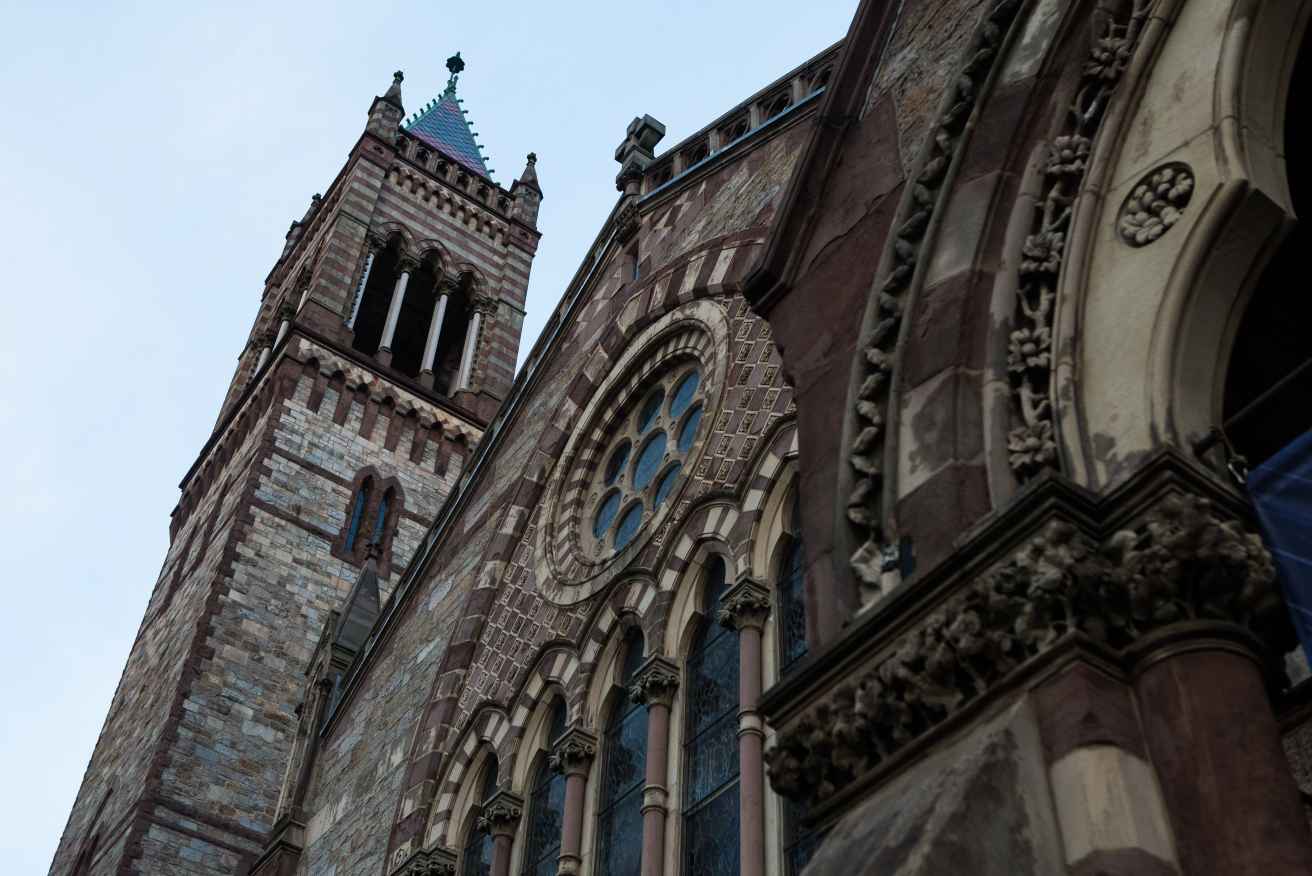
The Old South Church in Boston

God's Generosity, Our Response

A Sermon by Rev. Dr. Kenneth Orth

July 10, 2005
Isaiah 55: 10-13; Matthew 13: 1-9, 18-23
 
 My first word today must be of thanks.  Thanks be to God for the beauty of this summer’s day, thanks be to you for inviting me to share with you God’s word in all its abundance and complexity, thanks be to this community of Christ in which the fruits of the word continue to grow and be manifested among us.

Will you pray with me?
 Gracious God, and Holy, enter our hearts, our minds, our whole beings in this time.  Help us prepare the soil of our lives in anticipation of that which you choose to plant in them, that we may in due time help to bring about your harvest of transformation, justice, mercy, kindness, and love.  Guide our thoughts, our words, our deeds, that our alleluias may indeed flood the skies, light our way, make us whole, and set us free.  Amen.

 Today is the eighth Sunday after Pentecost, in which our lectionary readings focus on growth in the Spirit.  The images offered to us in Isaiah and Matthew give us insight into God’s extravagant blessing, mercy, and love showered upon us freely and openly.  During this long season of the Sundays after Pentecost, we are invited to take the time to develop more fully the images of God’s presence and action in our lives.  The seeds planted in the heart take time to open, sprout, grow, flower and bear fruit.  God is the giver of this life-giving seed. Just as a seed is not a dead but a living thing, so is God’s word is not a rigid, dead thing, but an ever-growing reality, changing us, transforming us and the world of which we are a part.  Our image of God’s word is not one of a fossil, a remnant of that which once was alive, but a seed, that needs to be planted in us, grow in us, to bring forth new life, new truth, new hope.  Indeed, God is still speaking!

 In our reading from Isaiah, we hear that God sends forth the rain and snow to water the earth in order to make it bring forth life: sprouting and growing, giving seed to the sower and bread to the eater.  We are to go out in the joy of this word of life, and be led back in the peace of God’s love.

The great Jewish rabbi, Abraham Heschel, wrote, “We are to take Sabbath in our lives to rest in the fact that we are the children of God.  We must take a day to especially care for the seed of eternity planted in the soul.  Even when the soul is seared, even when no prayer can come out of our tightened throats, the clear, silent rest of Sabbath leads us to a realm of endless peace, and to the beginning of an awareness of what eternity means.”

 Is this a response we can make when the horrors of the week’s news of bombings in London, intensifying war in Iraq, countless deaths of children in Africa, hurricanes and riptides, threaten to undo us?  To remember the “seed of eternity planted in the soul.”  Rabbi Heschel reminds us that there will be days in which our seared souls, our tightened throats must stop and simply listen for God’s eternal truth, which was in the beginning, is now, and will be long after our lives on this earth have come to their fulfillment.

 For the mountains and hills still burst in to song, the trees of the fields clap their hands, and the evergreen cypress and myrtle stand in place of thorns and briers testifying to the reality of the Eternal One.

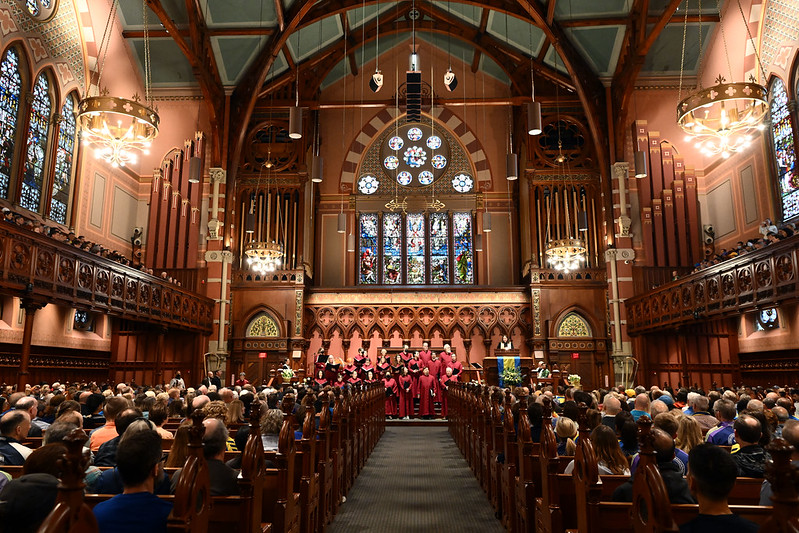
 In Matthew, Jesus invites us into the imagery of the sower and the seed. Of course, the purpose of parables is to tease our imaginations, illustrate a point, or even at times to challenge accepted values.  There are always deeper meanings and layers of truths in parables for the hearer to discern.  What might you discern for yourself in this story this morning?  Clearly the story is so important as to have made it up onto one of the stained glass windows in the sanctuary. (To my left and to your right—the last window in the series there.)

 First, we may assert that Jesus is saying that the word of God is a living, growing thing.  It is clear that the seed, the word, must be sown within and among us for it to bear fruit.  It will not bear fruit by being put away and not exposed to the life-giving soil of our lives.  We remember Jesus’ words, “unless a seed fall to the ground and die, it cannot bring forth new fruit.”  The seed risks dying and our response to it is what makes all the difference in the world.  Will we help it come to life?  It has been said, “it is not our abilities that show who we are, it is our choices that reveal our true identity.”  What choices are we called to make with this precious seed being sown in us today?

 Whenever I hear this parable, I cannot help but think of my first eighteen years growing up on a farm in rural South Dakota.  Each spring the soil needed to be prepared.  Plowing, seeding, fertilizing, and then praying for the right amounts of sun and rain for a harvest to come.  Whether on a rural farm, a suburban yard, or an urban garden, such as the one that graces us right outside our door in the midst of concrete, brick and mortar, we know well our ultimate dependence upon God for these places to come to fruition and beauty, and our need to tned them faithfully for growth to continue.

 But I also remember the story of an urban dweller who came driving by the farmer who was at work in the field.  The car stopped, and the farmer, as was the friendly custom of rural life, stopped his tractor and they spoke.  “This is quite a beautiful farm that God has given you,” said the one from the city.  “Yes, it is.  I am grateful,” replied the farmer.  “Yes, God’s gifts are many, aren’t they?”
“Yes, they certainly are,” was the farmer’s response. “It is amazing how God has blessed you with this land and its fruits.”  “Yes, that is true,” returned the farmer.   “ What an astounding gift God has given you!”  “Without a doubt,” answered the farmer.  “It is such a gift of God you have received. “  By now the farmer was feeling a bit tested by the conversation, and said, “ Well, yes, this is a beautiful sight—but you should have seen it when God was taking care of it all by himself.”

 Was this arrogance on the part of the farmer, or a kind of humility?  The word humility comes from the same root as the word “humus” or “earth”.  To be humble means to be grounded in the earth, in contact with reality.  It means we are neither puffed up with self-importance, nor deflated with self-loathing.  It is remembering who we are:  children of God, beloved of God.  It means we understand the reality of interdependence.  In the Christian community we are all interdependent, like parts of one body, each with its own importance and needs.  Perhaps the farmer was pointing out the reality that God does count on us to do our part, to respond to the generosity and love that God first gives us.

 Our response, our choices, do make a difference.  While we are utterly dependent on God for the gift of life itself, we are also aware that God has given us independence to make choices on our own, and that the interdependence of our life with God is central in our growing relationship with the Eternal One, a growth that has its effects in our communal life.

 Jesus reminds us in the parable that soils are each unique.  He describes four soils in his story.  We must admit that in our own experience, most of the soils of our lives are often mixed and do not fall so easily into strict categories.  We have within us beaten pathways, rocks and thorns, cultivated areas.  We do not create the seeds, sun, rain.  But we can cultivate our soil with hoe, rake, and spade, making our soil as receptive as possible.  What tools are you using to prepare the soil of your life?  Bible study, meditation, prayer time, worship, volunteer work, community service, taking Sabbath time?
 

 The first seeds fall on the path and are snatched away before anything can happen.  It reminds me of the word “pre-occupied”, which means “occupied in advance.”  If we are preoccupied when the word comes, we are occupied in advance.  There is no room for the seed to come in.  God is asking me here to live in the present, weaning me from clinging to the past too tightly and gently revisiting my anxious straining into the future.  As with breath, I cannot store up the seed for later.  I can’t live on my breath of ten years ago, or even of five minutes ago.  My relationship with God who is the Eternal Now must be in the now or it is nothing.  The word is taken away if I refuse to take it into the Now of my existence.

 Wendell Berry’s poem, “The Wild Geese” illustrates this:

 “Horseback on Sunday afternoon,
 we taste persimmon and wild grape,
 sharp sweet of summer’s end.
 We open the persimmon seed to find the tree
 that stands in promise, pale,
 in the seed’s marrow.
 Geese appear high over us,
 pass, and the sky closes Abandon,
 as in love or sleep, holds them in their way.
 Clear in the ancient faith:  what we need is here.
 And we pray, not for new earth or heaven, but to be
 quiet in heart, and in eye clear.
 What we need is here.


 What we need is here:  the Eternal Now.

 The second group of seeds fall on rocky ground, with no depth of soil.  It is soon scorched and withers away.  The 13th century poet, Rumi, reminds us:
 “There is a necessary dying, and then Jesus is breathing again.  Very little grows on jagged rock.  Be earth.  Be ground.  Be crumbled, so wildflowers will come up where you are.  You’ve been stony for too many years.  Try something different.  Let go.  Be ground.”

 Letting go is a spiritual discipline of trust.  Faith is trust, leaving room for us to be ourselves.  Faith liberates.  To release the stone, cold heart of the well-defended life is to live in the hope and mercy of God.  Let God plant something in us.  Release old habits, old ways of coping that no longer lead to life.  Let go.
 

 The third seeds fall among the thorns.  The thorns, the cares of the world, the lure of wealth choke the word of God within us.  How do we find our way past the dangers, toils, and snares of the world in which we live?  We listen to God, who will help us discern our true needs from our false desires.  God would give us the bread of justice, while we are fooled by the cake of affluence that does not nurture our souls.  The Danish theologian Kierkegaard says,

“A man began to pray.  And at first he thought prayer was speaking.  The longer he prayed, the more quiet he became, until he realized that most of prayer is listening.”

 To listen well is to begin to discern the true things that eternity is calling me to embrace, and to see that if my fame, power, prestige, and wealth are bought at the price of my relationship to God, the Eternal one, I am being led to emptiness.  As my spiritual director, Martin Smith, once said, “Misery is training upon another what only God can provide.”  So I begin to say with Augustine, “Thou hast made us for thyself, and our hearts shall be restless until they find rest in Thee, O God.”

 And the fourth group of seeds fell upon good soil.  Here there is a recognition of the interdependence of God’s word and our response bringing forth new fruit in our lives.  Here we recapture and restore within us the spirit of audacity that grows from an abiding faith that God is in charge and a daily expectation that incredible things are possible.  Here we recognize the word of God is a living, growing thing.  New life is possible, new exodus journeys happen, we are led through even more wildernesses and eventually on to a promised land.  The arc of the history of God’s people bends indeed toward justice, mercy, love, and room at the table for all who know and claim God’s love.

 For many of us the historic vote at the United Church of Christ’s synod earlier this week in support of same-sex marriage stands as an example of the fruits borne out of a well-cultivated, growing truth of God’s word.  The fact that my partner of thirty years and I were married in the midst of this historic and loving community last November stands as a beacon of light and hope that we could not have dared to think about too deeply through much of our lives, lest our hearts would break.  But prayers are answered.  God moves on with hope, and love, and mercy, and kindness at God’s center, calling for the reconciliation of the whole human family.  So may the fruit of God’s word continue to bless us and may it not return to God empty, but full of lives filled with hope and peace, joy and thanksgiving.  May alleluia be always our song.
 

“For the wonders that astound us, thanks be to God.
 For the truths that still confound us, thanks be to God.
 But most of all that Love has found us, thanks be to God.
 Amen.


Copyright © 2005, Old South Church and by author.
Excerpts are permitted as long as full accreditation is made
to Old South Church and to the author.

Back to Sermon Page

The Old South Church in Boston
645 Boylston Street
Boston, MA 02116
(617) 536-1970