Based on Deuteronomy 26.4-9 and 2 Corinthians 4.16-5.1
After graduating from seminary, I interviewed for a job as pastor of a tiny, parish in Maine. Following the interview, a couple of the parishioners took me on a tour of the village. It wasn’t a long tour: they pointed out the Grange Hall, the church, and the one-room cabin they had found for me to live in. I noted with some dismay the small, unmistakable building not far behind it in the woods. “Does the cabin have plumbing?” I asked hopefully. “’Fraid not,” was the reply.
Human adaptability is a wondrous thing. I lived comfortably in that cabin, although I always knew my time in Maine was temporary. Yet, it was the start of a journey that has taken me to many places. In some ways, that journey is symbolized in the variety of abodes in which I have lived: small and large, rural and urban, rented and owned, plumbed and unplumbed.
As the biblical authors are at pains to remind us: we are visitors here … we are just passing through. The two passages from the scriptures we heard today speak of different aspects of our impermanence. Biblically speaking, Christianly speaking: life is a journey and it is as if we all live in tents.
The passage from Deuteronomy, begins with the memorable phrase: “a wandering Aramaean was my father,” and it goes on to tell the story of how God rescued the Hebrew people from their suffering in Egypt and led them out on the great journey of the Exodus. They became a nomadic people – wandering and journeying – until they reached the land God had promised them.
The story affirms that because God guided them, they did not merely manage the harsh and demanding life of the Bedouin, they flourished. Their flocks increased, their descendants were many; they gained in wealth and status.
In the Hebrew Bible, God is sometimes referred to as Shekinah: meaning, the God who pitches his tent among the people. Our lives may be impermanent, our stay temporary, but God is with us … she pitches her own tent among ours. That, in the end, is the single most important article of the Judeo-Christian faith: that God is present with us on the journey… it is all the difference in the world: the difference between despair and hope; between nothingness and meaning.
In his letter to the Corinthians, Paul writes about the impermanence of our individual lives, our own mortality. Paul promises that if the earthly tent we live in is destroyed (that is our body), we have a building from God, not made by human hands, eternal in the heavens.
This deeply moving passage evokes, for many of us, the memory of loved ones who have passed on. And it ties in with the story of our nomadic ancestors … for they, too, passed on: staying for a while in this location, and then passing on to another. Living out their lives, and then passing on to an eternal life, and in the process passing on the story of their lives, and the practice of their faith to the next generation. Indeed, life is a journey and it is as if we all live in tents.
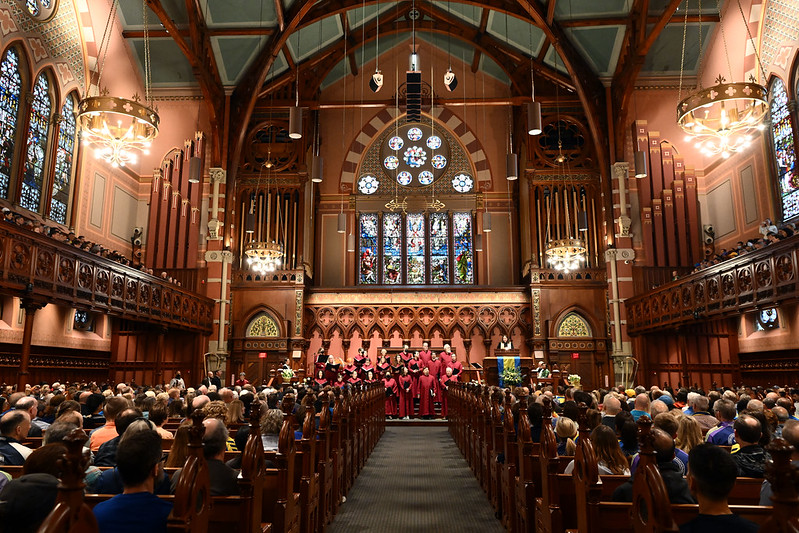
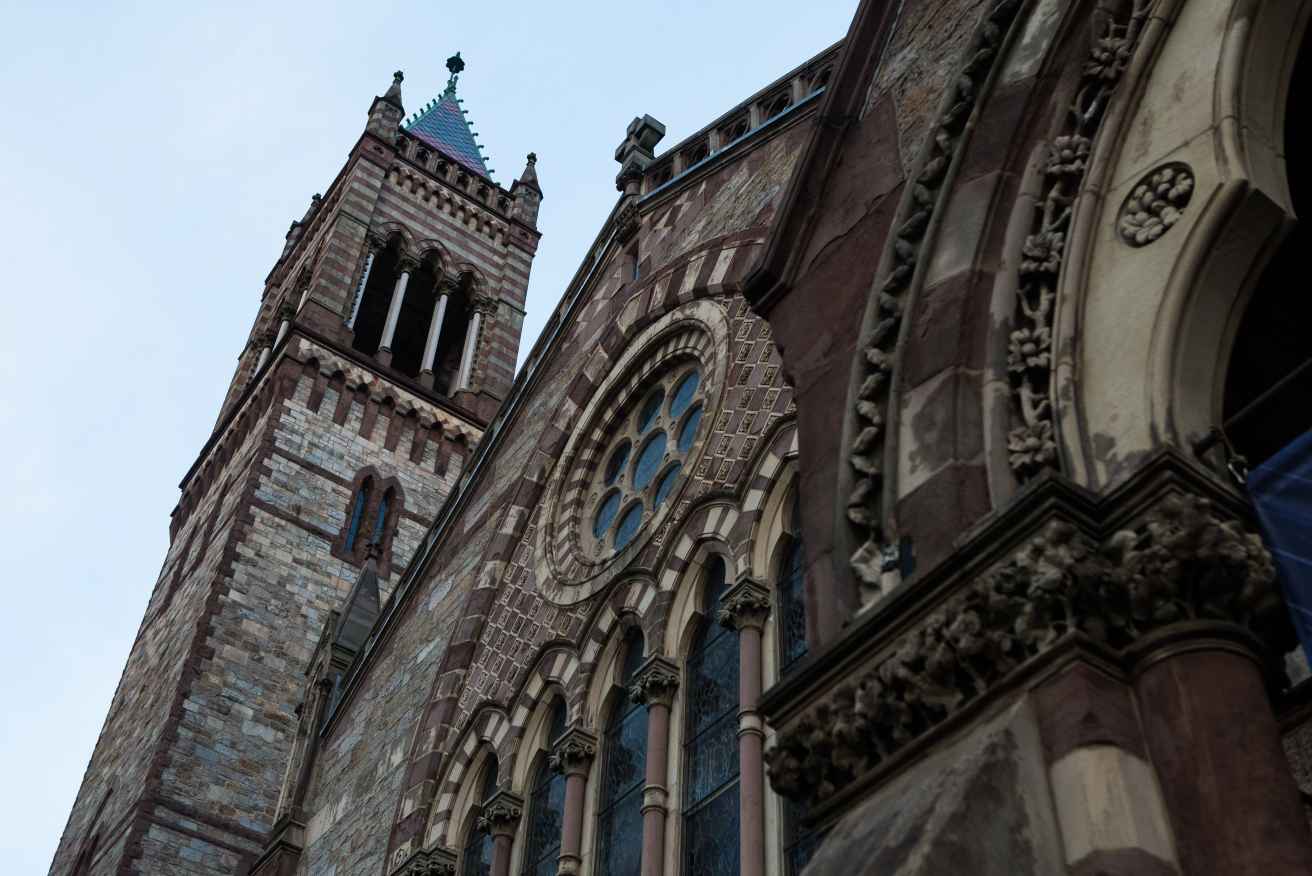
Old South Church, on the other hand, has a kind of permanent feel about it. It is such an old and, some would say, venerable institution. This building – hewn of rock and stone – embedded in the earth, feels nothing if not solid. That is, until you learn that this is the third meeting house in this congregation’s 335-year-old history, and until you learn that our ancestors pitched this tent, this third meeting house, on wooden pilings!
Yet, no matter how you view this particular structure – as precariously located or solid as rock – Old South Church in Boston is for many people, a place to sojourn, to pitch one’s tent, if only for a short time. On any given Sunday we are pleased to welcome up to 50 visitors: students, conventioneers, confirmation classes, tourists, business people, athletes, academics and visiting choirs.
To some people we say our hellos and goodbyes, our welcomes and our Godspeeds almost in the same breath. Yet, whether visitors come for one or two Sundays, or stay longer, they gift our lives by their presence. We hope and pray that they also take away a gift with them – the gift of refreshment, or added insight, the gift of music or prayer; the gift of hope glimpsed anew, or the gift of an encounter with one or more of this community.
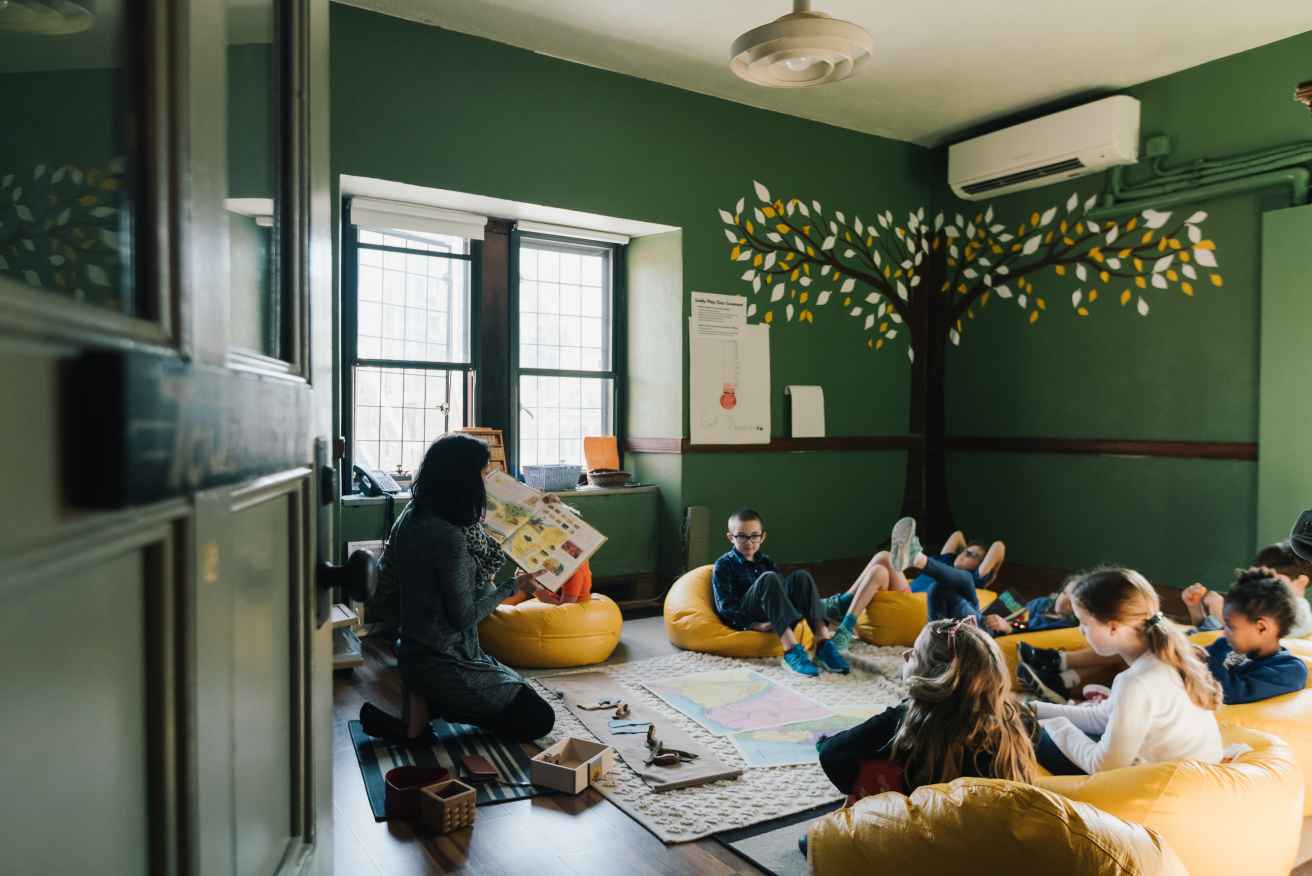
In this sense, Old South functions a little like a teaching hospital. We are a place and a community where people come, learn, grow, serve and then pass on. Old South is a kind of living laboratory of faith, and a place to learn and to practice the craft of Christian discipleship.
Kate Layzer, our Interim Assistant Minister, illustrates this. She came a year ago. She pitched her tent with us … hammering down tent pegs that, for all the world, felt deep and permanent. Yet, her time with us is up, coming to a close this week. She will journey on, to sojourn with new people in new locations.
Kate’s sojourn among us illustrates how to sojourn well. I think of the Bedouin encampments in the rural areas of Palestine. While they are a nomadic people and everything is built to travel, you almost wouldn’t know it by visiting them. They build enclosures for the animals, and make sophisticated arrangements for cooking. Their tents are comfortable and decorated with carpets and furnishings. Everything looks permanent; though everything is designed to be mobile. That is to say, they live as well and deeply, though on the move, as those of us of who think of our residence as more permanent.
Maybe it is despite the temporary nature of Kate’s assignment at Old South – maybe it is because of is – that Kate has brought such meaning, intentionality, and spiritual presence to all she did: to meetings, and conversations, to her writing, listening, and her speaking.
Another of Kate’s gifts to us has been her perseverance in bringing the United Church of Christ’s advertising campaign to Old South. It is a campaign that promises we will practice an extravagant hospitality – a welcome to stranger and alien, to immigrant and tourist – in the name of Christ who is our host.In times such as these in which we are living – that is to say, times fraught with war and terror – it is tempting for humans make God in their own minds ever smaller, ever more tribal: a God we invoke to bless my nation, my war, my people. The UCC’s campaign, on the other hand, challenges us to rediscover the God of heaven and earth, God of all the nations and peoples of the earth.
In these and other ways, I give God thanks for the ministry of Kate Layzer, for her sojourn among us, for the gift of her presence.Earlier I compared Old South to a teaching hospital … a kind of revolving door where people come and go. Yet, also, like a teaching hospital, Old South is a permanent home to many. There are people here who have been part of this community virtually their whole lives. In June we will be honoring 32 people who have been members of this congregation for more than 40 years. In this world of travel, of mobility and transience, this is a gift indeed. These members give us the gifts of perspective and memory and loyalty… of roots that are deep and broad.
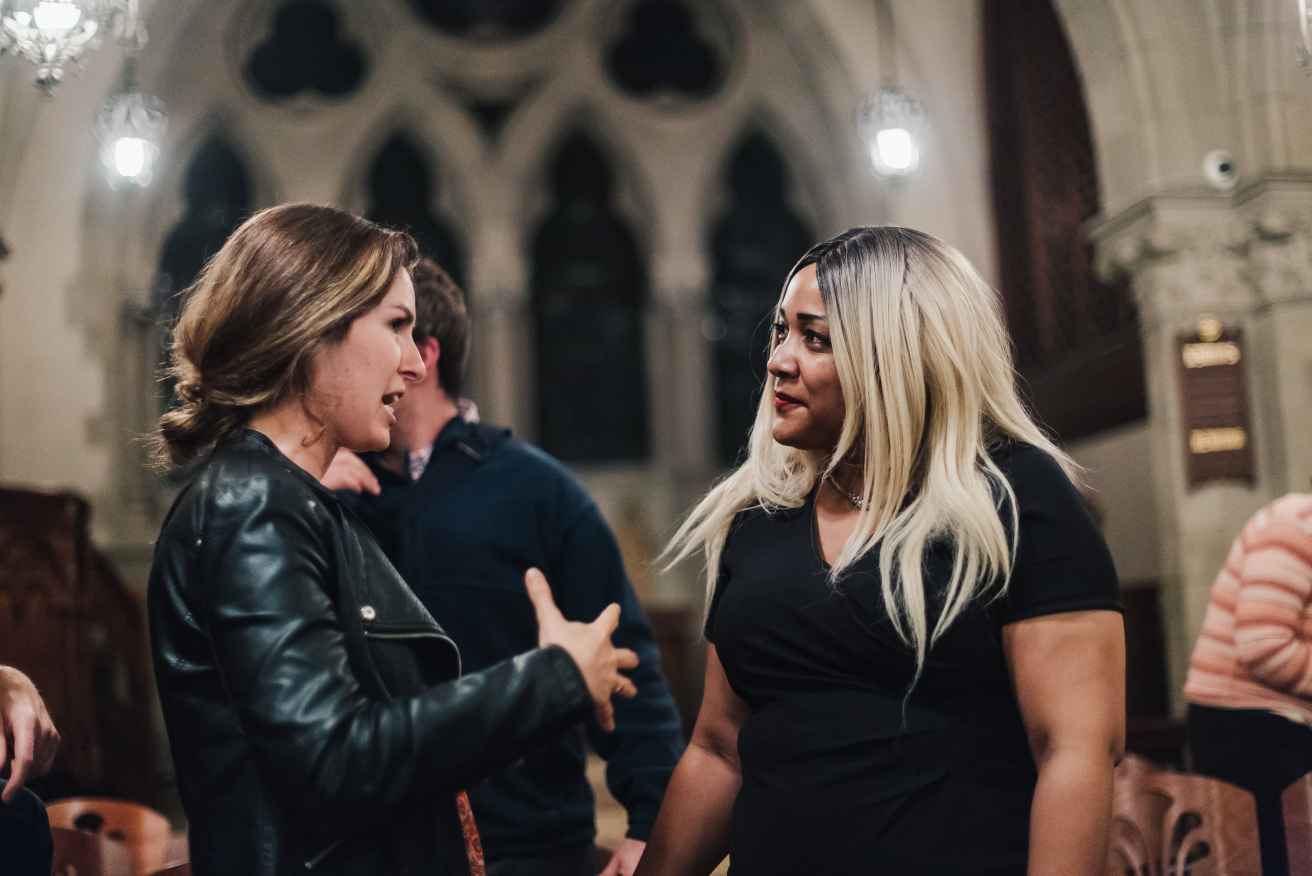
In T.S. Eliot’s poem, “The Love Song of J. Alfred Prufrock”, there is this memorable line: “In the room the women come and go, talking of Michelangelo.” What is so striking about that line is that the women are making an ordinary moment significant. Amidst the ordinariness of everyday comings and goings, we find them conversing about one of the world’s greatest artistic minds.
Whether we are here for a morning or for 50 years, our time will be well spent if we are intentional about the journey; making the ordinary significant and investing the everyday with meaning.Yes, life is a journey and it is as if we all live in tents. Yet, as anyone who has camped out can tell you, a well-pitched tent, can be as much a home as something built of rock and steel, depending on how you live in it.
So, come, pitch your tent among us. Whether it be for a morning, or for a year, or for a life-time. For at its best, this is a place and community in which we are invited to practice the craft of Christian discipleship; it is a place that calls us to deep things, to meaningful conversations, to expansive relationships, to growth and learning … our horizons ever expanding, our welcome growing more and more extravagant.
And, how could it be otherwise? For we who pitch our tents in such a place, find ourselves accompanied by the very presence of the Living God.
Copyright © 2005, Old South Church and by author.
Excerpts are permitted as long as full accreditation is made
to Old South Church and to the author.