Charlie
Brown runs into Linus and asks where he has been.
At Church School, replies Linus.
That should be interesting, says Charlie Brown.
It is,
replies Linus. We’ve been reading the New
Testament. Although, he continues
thoughtfully, I must admit it
makes me feel a little
guilty. I always feel like I’m reading someone else’s mail!
The
New Testament is an intensely personal document. It contains letters,
autobiographical stories and personal testimonies. In some instances we
are,
literally, reading other people’s mail.
The
New Testament is not a collection of rational arguments. It is the
testimony,
or testament of individual witnesses – eye witnesses – who are intent
upon
reporting the experience of love they themselves encountered … an
experience of
love that overtook them, overwhelmed them and changed them.
In
the case of the Acts of the Apostles, from which we read this morning,
it is
not as much like reading someone’s mail … as it is like watching an old
home
movie. The movie is in black and white, the picture is grainy and
everything
appears a bit distant and strange. And, yet, these are our people, our
ancestors, our great, great, great grandparents in the faith.
The camera opens on a room in a house in the
Mediterranean seacoast town of
We hear snippets of various languages: Hebrew, Aramaic
and Greek. This is an international, multi-lingual gathering … yet
everyone
seems comfortable and fluent in each others tongue. Jew and Gentile get
along.
They
refer to the deceased with two names. Some call her Dorcas, some
Tabitha. It is
obvious that she, like they, was a boundary-crosser, comfortable in
different
ethnic and linguistic environments. Remarkably, they refer to her as a disciple of Jesus, a term otherwise
reserved for men.
There
are a great many widows gathered. They are young and old. What stands
out about
them is their poise and confidence … even in their grief. It is obvious
that
they belong here. In any other environment widows would keep to the
edges,
cower in the shadows.
Dorcas’
death has provoked such a crisis in the community of widows that a
decision is
made. They will send for Peter.
When
Peter arrives the widows exhibit the clothes Dorcas had sewed for them.
The
camera moves from tear-filled eyes to articles of clothing that Dorcas
had made.
The lens caresses an array of colors, fabrics, textures, designs. In
the faces
of the widows of Joppa – in the faces of this formerly isolated and
socially
vulnerable community – the camera exposes a community that has found a
home in
the family of Christ. They are safe here. They are respected. They
belong.
Dorcas has seen to that.
This
week I followed an on-line conversation about this New Testament story.
It was
a conversation among gay, lesbian, bisexual and transgender Christians.
They
identified powerfully with the experience of first century widows who
existed
on the margins of society, in economic vulnerability and in family
households
that don’t look traditional.
In
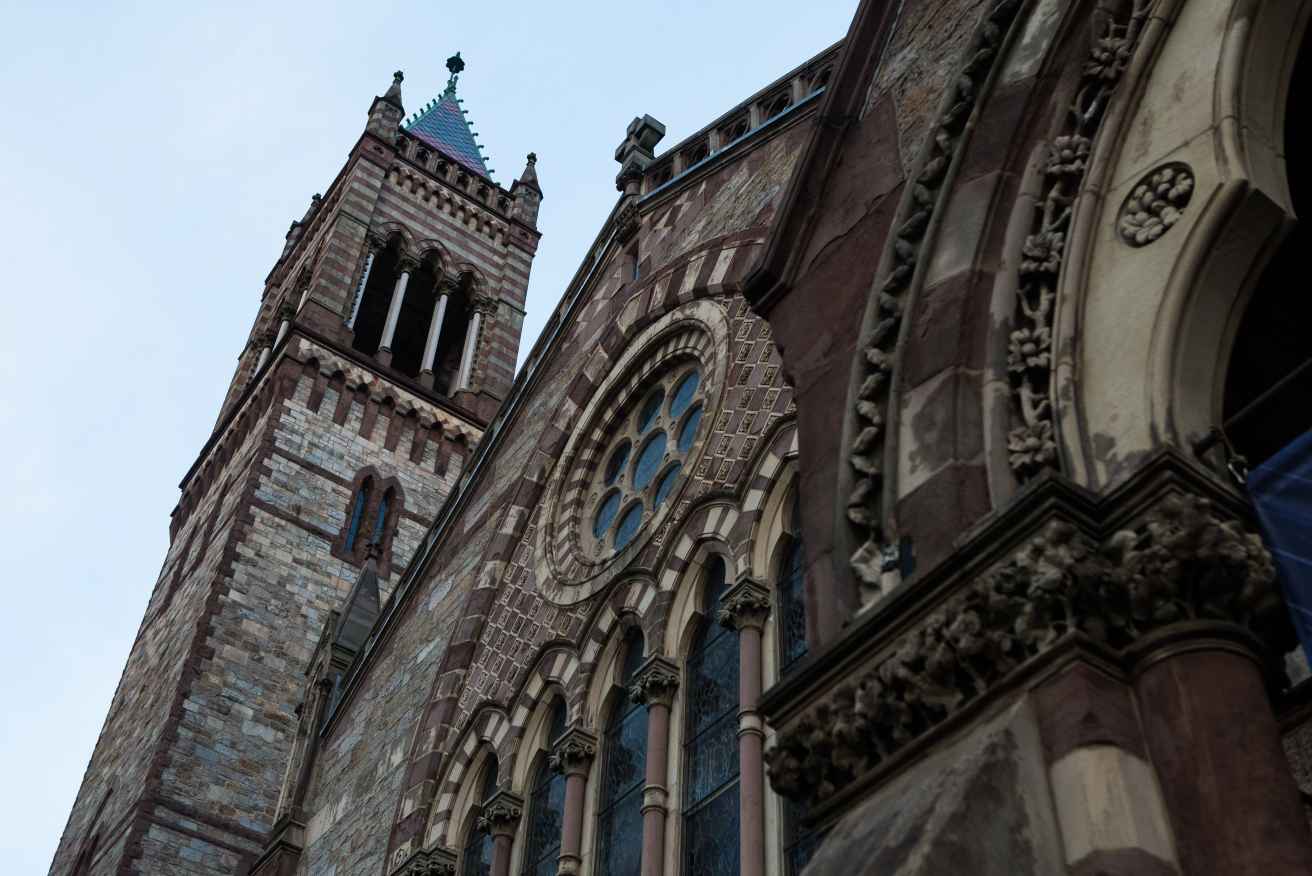
reading this on-line conversation I was reminded of the stories I had
heard
about
Secretly,
she organized an underground prayer group for people with HIV/AIDs and
their
supporters. It was so secretive it was by word of mouth and invitation
only. It
was held off-site, in her home.
This
minister from Old South reached out to a vulnerable and isolated
community … a
dying community. Over time she wrapped them in the embrace of the
Christian
church, assuring them that they were welcome here. They have a home
here. There
is a place for them in the Christian family.
Since
then Old South has welcomed people who have, in their own words, “come
here to
die” because they had nowhere else to go and no one else would take
them in.
Friends,
we are the descendants of the people gathered in that home in Joppa. We
are the
heirs of our sister Dorcas and of the widows of Joppa. We are the
descendants
of that international, multi-lingual, Christian family who adopted
widows.
Today
we have baptized four adults and welcomed them into this Christian
family. It
is a family unlike other families. You don’t have to be born into this
family.
You can be adopted into it. You don’t have to look like anyone else, or
talk
like anyone else, or love like anyone else, or think or believe like
anyone
else. In this family you get to be who you are and how you are. In this
family
water is thicker than blood: the water of baptism.
We
live in a society where social isolation is a wrenching problem. People
who are
isolated and vulnerable feel unloved. Being unloved is a dangerous
condition
for humans. As my African American colleagues insist, those who join
gangs have
found in those gangs a family, a church if you will … a place they feel
they
belong. They are given a name, a home, a purpose. Vulnerable and
isolated
people will cling to any family they can get … even a gang.
If
there is an remedy to the shootings at Virginia Tech … if there is a
remedy to
the gang violence in the neighborhoods of
of the Christian church.
Today
the Old South congregation is family to people living with HIV/AIDs.
Old South
is family to people who live with mental illness and chronic illnesses
of many
kinds. It is family to those whose blood relatives have rejected them.
It is
family to non-traditional households. Old South is family to some who
are not
welcome in other communities of faith. And,
I
began with a Peanuts cartoon and I want to end with one. If you were a
follower
of the comic strip you know that Snoopy is an admirer of Vincent Van
Gogh. A
Van Gogh painting hangs in Snoopy’s doghouse. Van Gogh wrote that
“being loved
gives one wings, a certain surprising courage and energy. Then one is
more of a
complete person that otherwise.”
Dorcas
discovered in the community of Christ’s followers, that she was loved
and that
she had wings … wings that gave her the energy to sew garments and
otherwise
serve the most vulnerable population of her day. By loving the unloved
widows
of Joppa she, in turn, gave them wings.
The
cartoon I want to leave you with shows Charlie Brown and Snoopy playing
together in a large pile of leafs … it’s a big pile, nay a hill, nay a
mountain
of leafs.
Charlie
Brown takes a running jump and leaps into the pile of leafs. He sits
there for
a few moments, leafs on his head and cloths, simply enjoying the
experience.
Snoopy now takes his turn. He starts from yards and yards away. He
begins
running toward the pile. At just the right moment he vaults high into
the air.
His arms are over his head like that of a diver. Still aloft he
tumbles, doing
a double somersault, and then, head first, without fear or hesitancy,
Snoopy
dives deeply into the middle of a great, soft mountain of leafs.
For
this extended moment Charlie Brown and Snoopy share an experience of
pure,
exuberant joy. For this moment they experience being borne aloft on
wings. For
a moment, even Charlie Brown has forgotten his insecurities and gloom.
It
is a moment of pure joy … the sort of joy that only those who are loved
can
experience. No wonder the New Testament is so personal, so intimate. It
is the
story of people who are in love. They are in love with God. They are in
love
with God … because God first loved them. And, because God first loved
them,
they are free to freely love others.
Such
is God’s love for you, my friends. Such is God’s love for each of you.
It is
the sort of love that grows wings. Welcome to a world where nothing can
separate us from the love of God. Welcome to God’s family where water
is thicker
than blood.
Copyright © 2007, Old South Church and by author.
Excerpts are permitted as long as full accreditation is made
to Old South Church and to the author.