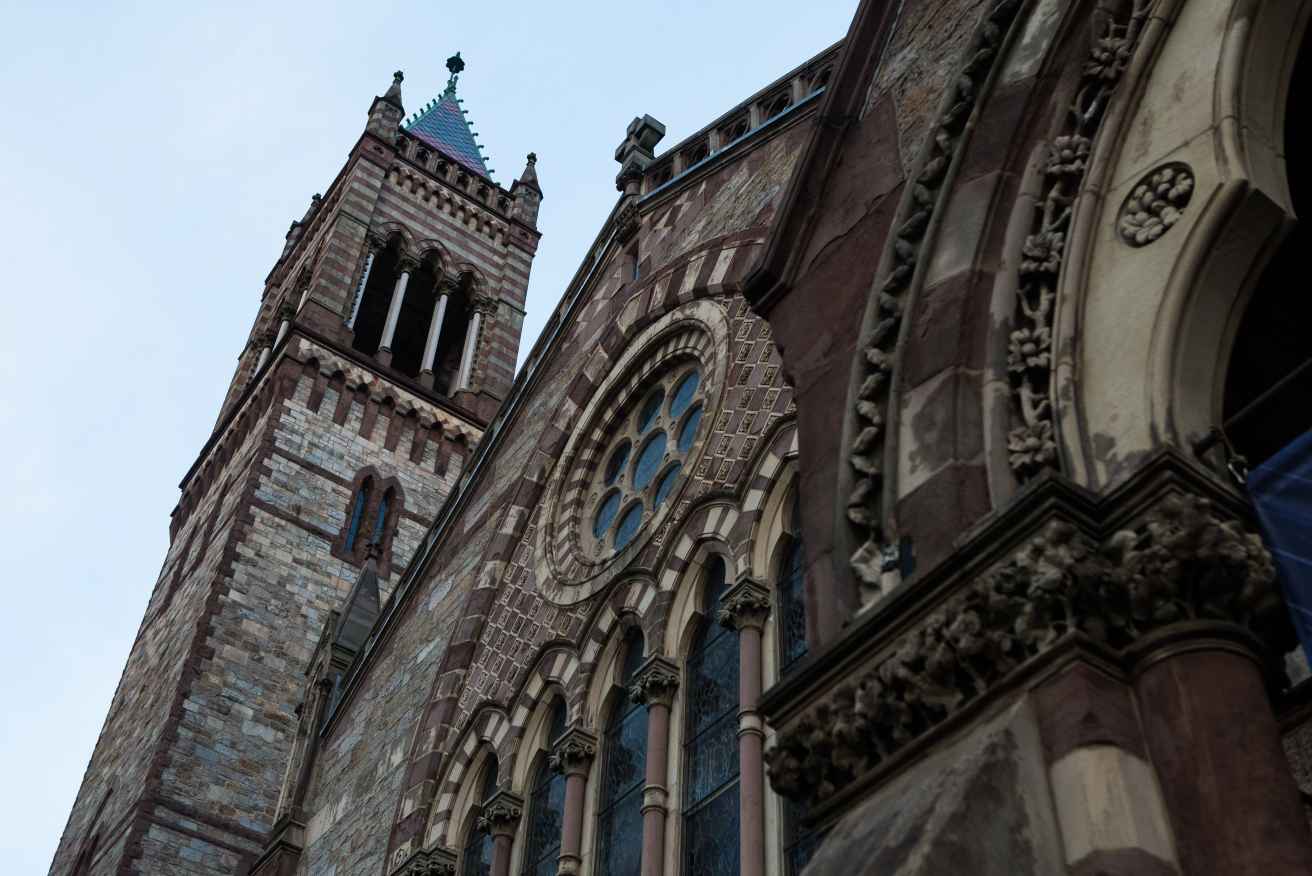
The Old South Church in Boston

Children, Covenant & Change of Mind

A Sermon by Rev. Quinn G. Caldwell

Exodus 32:1-14, Luke 1:67-80
October 9, 2005

Listen to this Sermonmp3 file

 
My sisters and brothers, this morning we have experienced together one of the greatest and most remarkable joys the people of God know: we baptized and welcomed Hannah and Ryan as our newest sister and brother.  We have enlarged our family, have widened the boundaries of our community yet again and have made a new generation of us heirs to the promise.  God is good.

As we did this remarkable thing, we promised, we covenanted, that we would care for them and tell them through our stories who our God is, for in the telling, we know that we always learn who we are.  Surely, one of the stories we will want to tell them is the one we heard today: the story of God, the Israelites, and the golden calf, for what it shows forth about who God is.

Now, to understand what’s happening in this story, it’s important that we note that just prior to it, God, having just freed the Israelites from bondage in Egypt and saved them from Pharaoh’s pursuing armies, had more than once given the Israelites a direct order: “You shall not make for yourself an idol, whether in the form of anything that is in heaven above, or that is on the earth beneath, or that is in the water under the earth.  You shall not bow down to them or worship them.”  And again later: “You shall not make gods of silver alongside me, nor shall you make for yourselves gods of gold.”  It’s one of the ten commandments, given directly to the people by their saving God, one of the terms of the relationship that God was building with them.  Now, we should note here that this was an altogether new way of worshiping for this people; always before in this people’s history, they and all they knew had worshiped their gods in tangible forms, in statues and idols and figurines.  To worship a God that was only spirit, that had no form to contemplate or touch or experience, to worship an invisible God, would have been a new thing.  So this commandment would have been very strange to them indeed.  But on the other hand, they couldn’t deny that that intangible spirit-God had freed them from their old lives of suffering with power and glory, that this new God they were meeting was godlike indeed.  So when they heard the commandment, they agreed to it.  They sealed the deal.  “OK, God,” they said in effect.  “You have chosen us and saved us, and we will be your people.  Your terms are new and strange to us, but we will abide by this covenant.”

Then we come to today’s story.  When we enter it, the mountain that Moses has climbed to talk with God has been shrouded in cloud and thunder and lightning, to all appearances a most violent and lethal storm, for well over a month.  Moses, their odd new leader and intermediary with God, has not been seen in all that time, is presumed dead, and the people, free but homeless, chosen but wandering, covenanted but scared in a strange land, the people turn to what they know.  They return to what is familiar to them, the best form of worship they know: they make an idol, a tangible god like the ones they have known before, the better to worship and venerate the LORD their God.  One can hardly blame them under the circumstances, which are, to say the least, confusing.

One can hardly blame them, except that in the story we tell, they had promised to God’s face not to do it.  They had entered into covenant with God.  They had said, “We shall not do this.  It’s new to us.  We don’t get it.  But we have seen for ourselves the saving action of this God in our lives, so we promise not to do it.”  And then, in a move that’s probably more familiar to more of us than any of us want to contemplate, they do it anyway.  So we can see why God is mad.  They’ve broken the covenant scarcely a month after it had been made and God, no longer legally bound by its terms, has every right to remove God’s saving presence from among them and let them be destroyed.  So God decides to do it.  God determines to let the people be destroyed.

But Moses will have none of it.  Moses calls God to account, and reminds God of who God is.  “Remember Abraham, Isaac, and Israel,” Moses says, “how you swore to them by your own self, saying to them, ‘I will multiply your descendants like the stars of heaven.’”  “Remember what you promised, God.  Remember the covenant you made with them.  Change your mind and do not bring disaster on your people.”  And God changes God’s mind.  God stays true to the covenant God has made even when the people do not.  For the sake of the covenant, for the sake of the love that God feels for the people, God changes God’s mind, God calls the people back.  God longed for them so deeply, so very deeply, that God decided to change God’s mind rather than be alone on the mountain.  And the people live.  And the people love and praise God, enough that the story is told and told and told, even down to this very day.  Which is why, of course, we’re here this morning, doing things like singing praise and passing peace and baptizing babies into ancient covenants.

That’s the kind of story whose telling makes of us the church.  The kind of story that reminds us why we make our own covenants, of membership, of marriage, of baptism.  For when we tell such stories as these, we remember that we are people of a God so radically, unaccountably faithful to the covenants that God makes, that we cannot help but feel called to that same kind of faithfulness.

It’s the kind of story we will want to tell Hannah and Ryan.  For it will help them understand why we cherish them the way we do.  Why we look after them the way we will.  Why we as Christians make the kind of countercultural promises to one another we’ve made today, and why we order our life together in the odd and joyful way that we do.  It’ll help them know why we call them to the same kind of life.

And we’ll tell them of Zechariah singing to his son.  How, on the child’s eighth day on the planet, the family and friends and neighbors of the couple gathered for the baby’s circumcision and naming ceremony.  And Zechariah, this old man and new father, was overcome with joy and the Holy Spirit.  How he grabbed his son, and in front of the entire crowd, began to sing to him.  “Blessed be the God of Israel, for he has looked favorably on his people,” he sang.  “…he has shown the mercy promised to our ancestors, and has remembered his holy covenant…and you, child, will be called the prophet of the Most High”.

And we’ll say to them: Can you picture that?  This proud and bent old man, in the middle of a crowd, overcome by the Holy Spirit and singing his hopes and dreams to the child in his arms, singing of God’s faithfulness, singing the story of the covenant of the loving and living God.  Can you picture that?  Did he look into his child’s eyes as he sang, and did his own eyes blur with tears?  Did his old hands tremble as he rocked his son?  Was his voice thin and reedy, or maybe it was gravelly and rough and overused.  Did it break with the emotion of what he sang?  Did the people standing there smile and lean against one another, thinking of the children and the once-children in their own lives, and did they join in singing to that baby of God, and hope, and covenant?  What must it sound like when a parent picks up a newborn baby and sings, “You will ‘…give knowledge of salvation to the people…by the tender mercy of our God, the dawn from on high will break upon us, to give light to those who sit in darkness and in the shadow of death, to guide our feet—yours and mine, my little one—in the way of peace”?  Can you picture that?

The story tells us that the child grew and became strong in spirit.  No wonder, with a welcome like that.  No wonder, when the first thing the child heard upon entering the community is a song of God’s righteousness, a loving chorus blessing the child, rehearsing the truths of God’s mighty deeds, promising life abundant, close to a God that’s forever reaching out and drawing close.  Is it any wonder that that child grew up to baptize the people—grew up to baptize even Jesus—in the love of the God that always changes God’s mind for the sake of bringing us closer, the love of the God that always remembers God covenants?

And we’ll ask them, Is it any wonder that we baptized you in that same way?  In water and Spirit, we blessed you into God’s community, and made covenants with you that we shall strive to remember.  We bid you welcome and proclaimed you our own.  We covenanted with you and your parents that we would cherish you and make you know that you are cherished of God.  We promised that we would tell you our stories, the stories of God’s covenanting, remembering, saving love.  We promised to share life as God’s pilgrims with you.  We proclaimed to you our faith that even if you should one day cast idols and bow down to that which is not God—and if you’re like the rest of us, chances are good that you will—then God will nevertheless remember God’s holy covenant, forgive your sins, invite you home, and lead you in the ways of peace.  We’ll tell them, and they will remember.

It is a remarkable thing we have done today, my friends.  These are grand and weighty and jubilant covenants we have made with these little ones.  But then again, such covenants and promises are only fitting for those who worship our covenant God.

So make them we did.  And one day, years from now, when we are telling Hannah and Ryan about their God who remembers covenants, and about this day, when they were baptized, we’ll end the story like this:

And then, like old Zechariah, the people were filled with the Holy Spirit, and we turned to our babies and sang, “Child of God, your loving parent, learn to know whose child you are.  Grow to laugh and sing and worship, trust and love God more than all.”  And baptized in Christ, cherished by God, showered with hope, sung the stories of their God, and raised in covenant by the whole people, the children grew and became strong in spirit.  Amen and amen.


Copyright © 2005, Old South Church and by author.
Excerpts are permitted as long as full accreditation is made
to Old South Church and to the author.

Back to Sermon Page

The Old South Church in Boston
645 Boylston Street
Boston, MA 02116
(617) 536-1970