When we are first introduced to the magi, they are looking up. We catch them looking up, peering into the sky, studying the sun and stars, the rotation of the planets, the tug of moon on the tides. We catch them poking and peering into another world, a celestial world, charting its motions and wondering what that world portends for this world … wondering how, and whether and to what degree what happens above matters to us down here.
It does matter, of course. What happens up there and what comes down from there does matter. It matters whether the rain is soaked in acid. It matters how much snow falls. It matters where tornados land. It matters whether very large comets will or will not crash to earth. The size of the hole in the ozone layer matters.
When I was living in Idaho, I was acutely aware of each winter’s snow fall. Everyone was. Idaho depends on the snow – the snow pack and the snowmelt – to make it through the spring, summer and fall. In that high desert climate, a good snowmelt allows for crop irrigation, flowing rivers to water sheep and cattle, and to permit the yearly run of salmon. A poor snow pack means drought, death and economic ruin.
In recent days California has been pounded by an Arctic storm: howling winds, pelting rains and heavy snow have pummeled that state. The weather has caused the toppling of trees. It has flipped eighteen-wheelers, forced evacuations, snapped telephone poles and cut off power to millions.
What the sky does, what comes from the sky, can change your perspective and it can change your life.
That is in part why the story of the magi is so haunting. We catch them looking up. We are a species prone to looking up: from Copernicus to Galileo to Carl Sagan; from the Tower of Babel to the Twin Towers to the John Hancock; from Egypt’s pyramids to Seattle’s Space Needle; from Icarus to Orville Wright to Steve Fossett to NASA … we have a hankering to look up, climb, soar, enter the world of the heavens.
And, like the magi, we have always suspected that God was more at home in the heavens than on earth. We have looked for God and imagined God up there, aloft, aloof, distant, above and beyond.
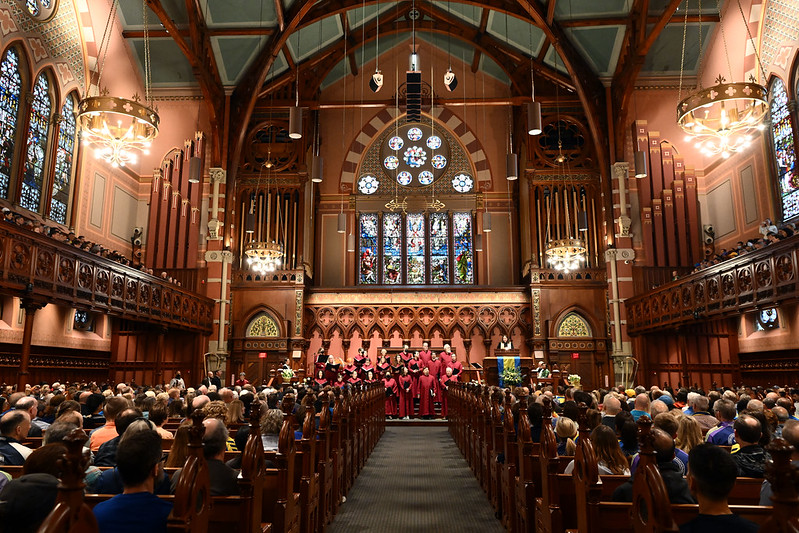
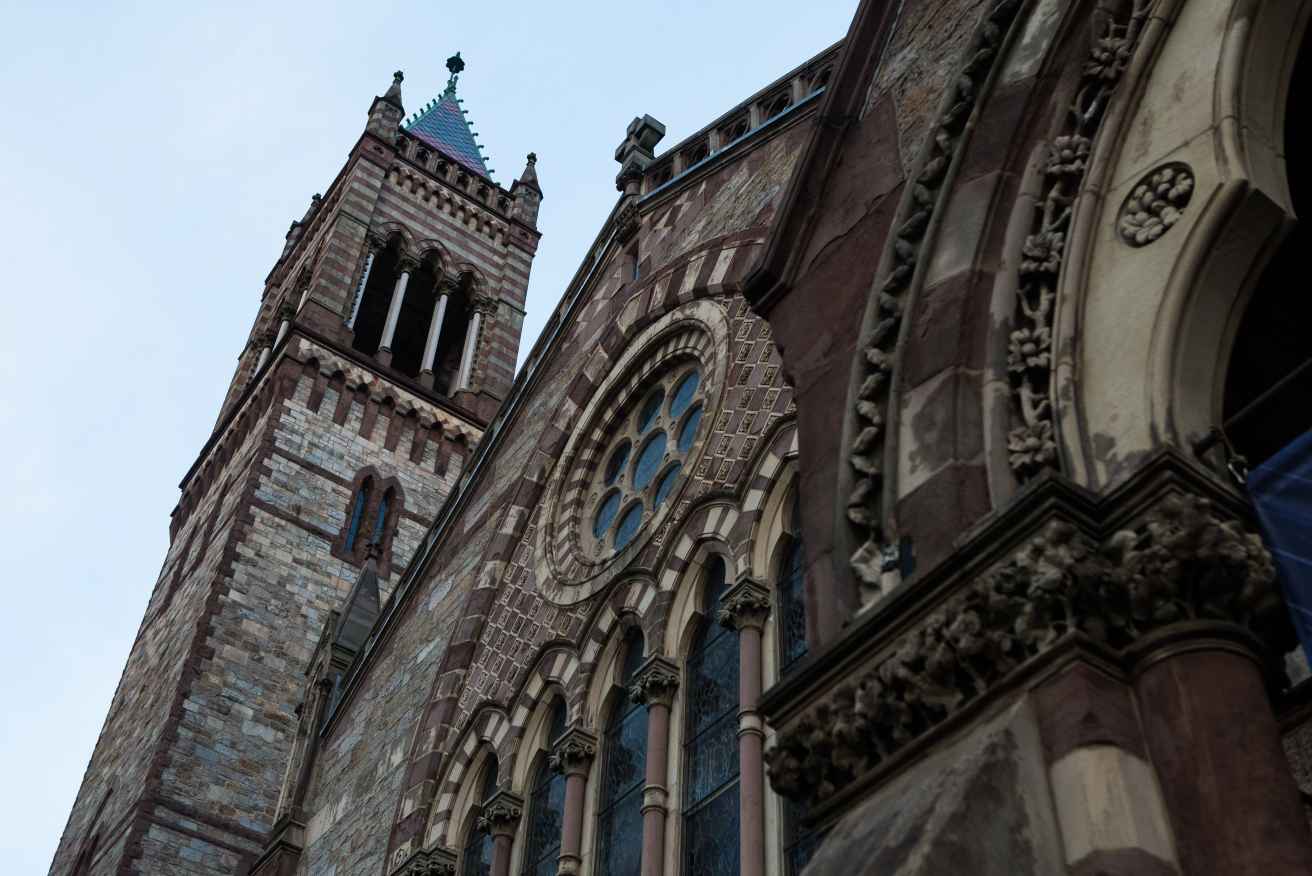
Old South’s soaring Tower, pointing upwards, is testimony that we are descendants of these magi.
Jeff Makholm, moderator of Old South, how many times have you climbed up into the Tower? Jeff loves climbing up there. It’s quite special. Quinn has been up countless times. I rather like climbing up there myself. Indeed, Quinn believes I am the first person ever to have climbed up into the Old South Tower wearing heels! Sometimes you have to make do.
Along with a great many others of my species, I have gazed up into the night sky with and without the aid of a telescope. I have stayed up late and driven out into the country to watch meteor showers. I have climbed mountains. I have repelled off bridges. I have jumped out of an airplane. We are descendants of these magi. We possess a curiosity about what is up there … and most of us enjoy the sensation of gaining altitude whenever the opportunity is presented.
We do know that God does not repose on Michelangelo’s cloud up there in the great blue beyond. We know that. But it is hard not to look upward when we speak or think of God.
So, what are the magi up to? What is their purpose in studying the sky? Matthew tells us they are looking for a king. Ancient kings were often heralded by celestial events: the rising of a new star, the flash of a meteor, the eclipse of sun or moon.
They are looking for a king. But not just any king. After all, there are lots of kings in the days of the magi: big kings and little kings, silly kings, pompous kings and warrior kings. The Persian and Median empires from which they hail is full of kings and kinglets. But despite the kings, or maybe because of the kings, the land is wracked with poverty, insecurity and strife. Brutish behavior prevails. On their journey, having crossed into another empire, the magi meet Herod, one of the worst of kings. Why wouldn’t they be looking for something new, something better, something higher?
Perhaps we can sympathize … for we, too, are in the season of looking for a new ruler, a leader to usher in a reign of peace in place of these endless wars; a king who will care for the people, defending the least, exercising compassion for the vulnerable. Surely, we can sympathize with this longing, this looking for a new leader, this looking up for something better.
When the magi arrive in the place where the star has stopped, they are in a small town, in Bethlehem of Judea. They find themselves in a stable, humid with the heat of beasts, smelling thickly of earth and dung. And here, for the first time in months, these exotic travelers from another land, these astrologer-priests from Babylon, Ethiopia and Persia, these haunting magi with their eyes glued to the sky … for the first time, they look down.
What is there to see? A peasant family with a newborn child: the infant, swaddled and lying on a bed of straw. And who knows how they know it – who knows what words God whispers into their ears and into their hearts – but somehow these star-gazers experience in that child an understanding of God they had not before known. Not aloft and aloof, but intimate and near. Not a thunderbolt from the heavens, but gentleness and mercy: forgiveness of the cruel, compassion toward the sorrowful, healer of woes, finder of the lost, lover of the unloveable.
We are forever looking up, you and I. Looking for God up there, out there. Expecting and wanting God to be bigger and grander and higher and …
But God has a different plan. God planned a different appearing: not among the moon and stars, not aloft on a heavenly cloud, not with scepter and throne and ermine robes … but here, here below, right here beside us, among us, clothed in the same flesh as you and I. It is, indeed, a wonder to behold.
It turns out that, like the magi, God, too, was looking for something different, something better. It turns out that God was no more satisfied with the kings of the earth than were the people of the earth. So, God did a new thing. But this new thing would have been for naught if nobody had noticed. It could have gone unnoticed. It was such a bare thing, a spare thing, a tiny thing: just the birth of another poor baby.
It took these hungering, curious, observant border-crossing magi to see what God had done.
By crossing borders, by leaving one empire and entering another, by crossing through religions and cultures in their journey, by passing through kingdoms and empires, the magi opened a way between distant and disparate peoples … a way through which a shaft of light entered … a way through which God was made visible.
Sometimes, you have to look down.
Copyright © 2008, Old South Church and by author.
Excerpts are permitted as long as full accreditation is made
to Old South Church and to the author.