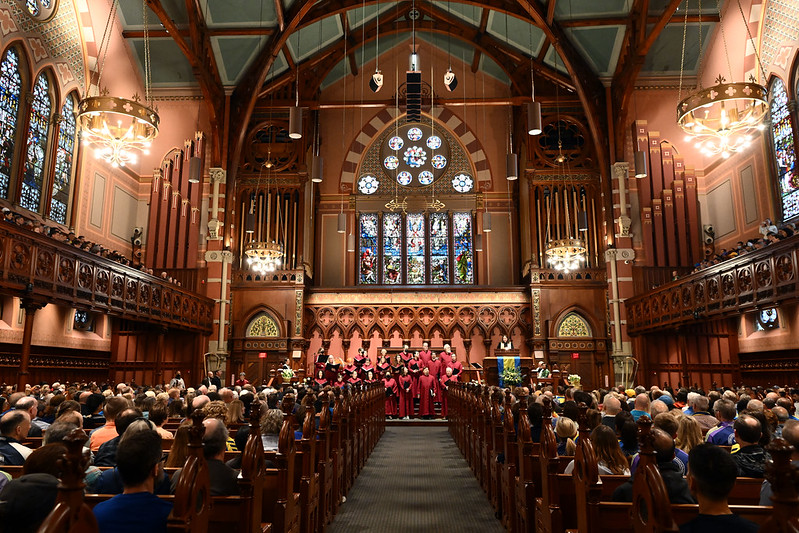
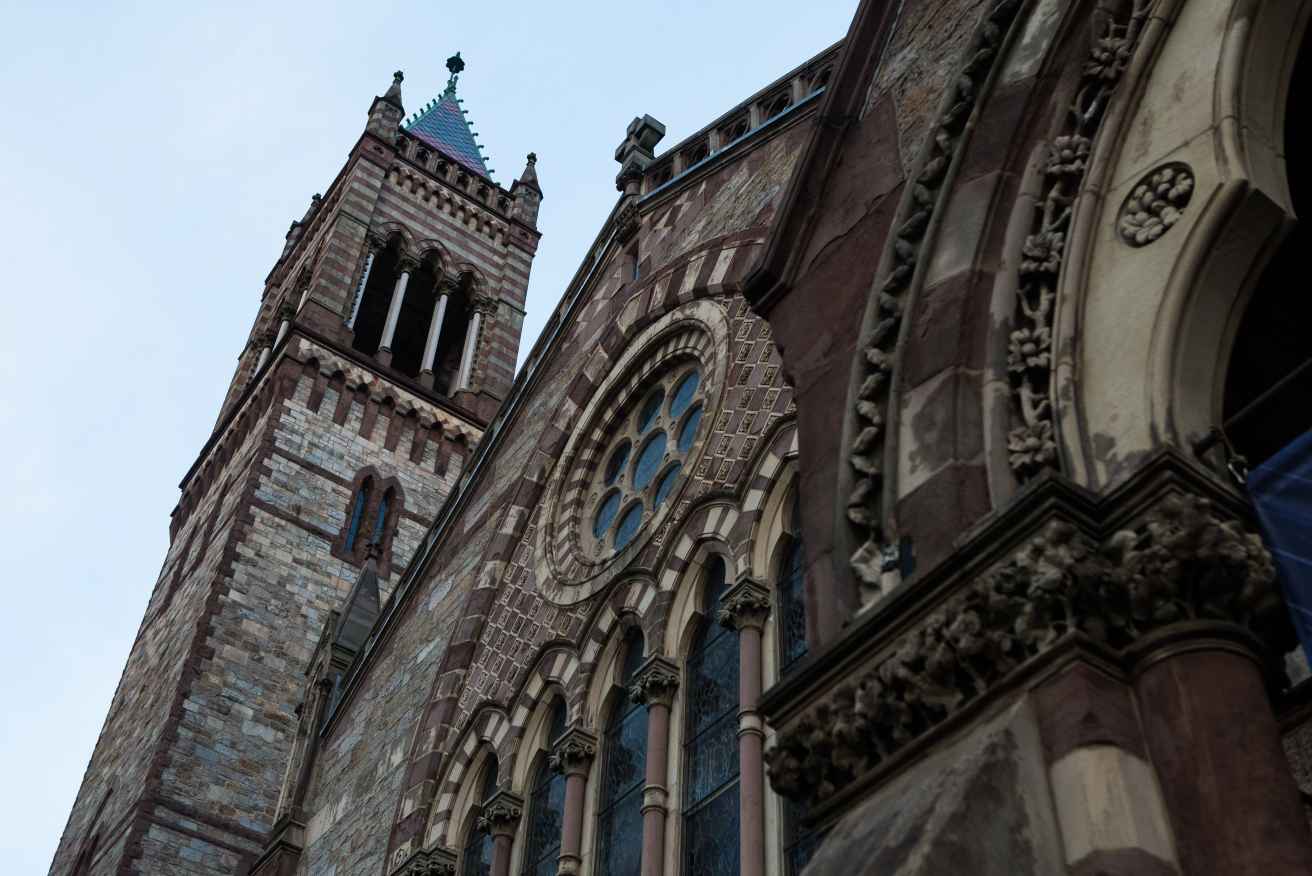
The Old South Church in Boston

Sprig

A Sermon by Rev. Quinn G. Caldwell

June 18, 2006


Ezekiel 17:22-24, Mark 4:26-34

Listen to this Sermonmp3 file


Will you pray with me?  Lord, may the words of my lips and the meditations of all our hearts
be acceptable in your sight.  Amen.

I have no doubt that, were I to add up all of the times I’ve heard the parable of the mustard seed, or heard or myself made reference to it in sermons and conversation, it would number well into the thousands.  You know it: the tiniest of all seeds is planted and becomes the biggest of all shrubs, the realm of God starts in small things and grows to be the biggest thing around.  Even if you’ve never been to church before today, I’m willing to bet you know it, or have at least heard of it.

So, while I know the mustard seed well.  I must confess that up until now, I have never had even so much as a nodding acquaintance with the parable that comes right before it in Mark’s gospel.  But now that we’ve met, we are fast becoming close friends, and I’d like to introduce you, as well.

Here it is again: “The kingdom of God is as if someone would scatter seed on the ground, and would sleep and rise night and day, and the seed would sprout and grow, he does not know how.  The earth produces of itself, first the stalk, then the head, then the full grain in the head.  But when the grain is ripe, at once he goes in with his sickle, because the harvest has come.”  It’s often called The Parable of the Seed Growing Secretly, but frankly, I think that’s a poor name.  I think a better name would be The Parable of the Earth, or maybe The Parable of the Earth Producing of Itself.  For you see, this parable isn’t really about the seed, it’s about the earth.  In the parable of the mustard seed, the realm and power of God in the world are compared to a seed.  In The Parable of the Earth, the realm and power of God in the world is the earth itself, the dirt, the stuff from which we know, and our stories say, our very bodies were created.

In the parable of the mustard seed, the realm and power of God is in the seed, which gets planted somewhere, in something that is apparently not the realm of God, somewhere outside the realm of God, a place that needs for God to sprout in it.  And when we look around our torn and battered world and realize all the places where we would love to have someone plant God, we can certainly see the truth in such a parable.

But The Parable of the Earth, now.  The Parable of the Earth says something different.  In the Parable of the Earth, Jesus says that the realm and power of God is the earth itself, the matrix in which the seeds of grain get planted.  God is the very ground in which the sower plants the seeds.  And somehow (the sower knows not how, says the story), somehow, the power that is in that ground surrounds those seeds, which contain all the raw materials and potential necessary for life, and activates them.  And the seed…sprouts.  And the sprout grows, drawing power and atoms and life from the earth, from God, the very ground of its being.  And when the sprout grows large enough, it breaks out of the ground in which it first took its being, and begins to take sustenance and energy from the sun, that is, from the world beyond the earth, as well.  It stretches higher and higher, toward the sun, but remains ever rooted in the soil, the ground from where it came.  And rooted there in the grace and power of God, it produces first the stalk, then the head, then the full grain in the head.  And the full grain?  The full grain is the next generation of seeds, ready, as the first plant begins to fade and return its atoms and its life to the place from which it came, those seeds are ready to fall back to the earth in their turn, to sink into the warm and dark ground, and there wait for the power of God to activate them and set free their potential and their life.  The ground from which the seeds sprout gives them the very power to begin the cycle over again, and life again springs forth.

The Parable of the Earth is one the prophet Ezekiel would have understood right away, though he took it even further.  In the picture he draws in his prophecy, God is both mighty arborist and powerful ground.  God takes a sprig from the lofty top of a cedar, the most valuable tree in the ancient near east, and plants it in the earth, that it might have the potential within it released, that it might produce boughs and bear fruit.

Now, what Ezekiel’s prophecy is actually about is the restoration of Israel’s sovereignty after a long exile in Babylon, and about the Jewish hope for God to raise up a new king, a Messiah, from the royal line.  Christians believe this hope was answered in Jesus Christ, the branch that sprang forth from the deep Jewish rootedness in God.  The fruit that branch bore while alive was the very fruit of transformation for thousands who encountered him.  And the fruit that branch bore after having died, gone down to the ground of his being, and sprung forth again, well, the sweetness of that fruit has transformed millions.

In Ezekiel’s vision, as in Jesus’ life, the cycle of renewal and resurrection is made plain: just as the power of God will, in time, make high the little tree God has planted, so too, when it is time for the high tree to give its life and its power and its atoms back to the ground from which it drew them, when it is time for the high tree to become low again, will God receive the tree and its life and power and atoms back into the ground, there to feed the very seeds it left behind.  As they are all rooted deeply in the same ground of being that the sprig is, all drawing life and strength from the same source, all having been activated and set free by the same earth, says Ezekiel, all the trees of the field shall know God’s name.  And that name is Ground of All Life.

One might say that planting sprigs is exactly what we’re about in baptism.  From parents who know themselves rooted in the love and power of God, who themselves have touched and drawn on the life that courses freely through the ground in which we live and move and have our being, God seeks to see the fruit, the new shoots, the sprigs that crown their parents in glory, rooted safely in good soil that will give them hope and strength to last a lifetime.  Parents who bring their children to church for baptism, and we who welcome those children in, seek the same rootedness for them.

Now, it is of course true that every child, baptized or not, is still rooted, still held safe and strong, still fed with love and life and energy by the God that made her.  And it is also true that it is not really we who plant the children in our midst, for as Ezekiel knows, if God is the ground, God is also always the Gardener who sows every seed and plants every sprig.  But when we baptize our children, when we welcome them fully into the life and work of our congregations, we promise to make sure they know the ground in which they live, and the hand that planted them.  We promise to teach them of their roots, to show them their connection to the source of their lives, and to help them learn to live well, and boldly, and joyfully, from that connection, and from none other.

So we covenant together to do the things that we know will help them to send down deep roots of faith into the ground of our being: today, we promised to tell Jack the stories of our faith, about Abraham, and Isaac, and Jacob, about Moses and Miriam and Ruth, about Mary and about Jesus, and about the church.  We promised to share with him the bread of life at the Lord’s Table, to be disciples together and walk together as Christian pilgrims, to love and support him and his family, to nurture and to challenge him as he grows.  We promised to be Christians together with him, and to help know he is rooted in God.

But of course, here at the beginning, long before it’s time to do any of those grand things with and for Jack, here at the beginning we did the first thing that any gardener would do for a newly-planted sprig: we watered him.

We watered him with water touched and blessed by the same Holy Spirit that blessed the water with which Jesus was baptized, the same Holy Spirit that brooded over the waters at the beginning of the Creation.  We trust and believe that that water, poured out on our little brother and seeping into the ground in which he is rooted, is the sign and seal of his participation in the power of Christ’s resurrection, in the great cycle of birth and resurrection, the very power of God set free to love the world into freedom and forgiveness.  And just as a good long soaking is the key to any new planting’s healthy beginning in the garden, so are the waters of baptism the beginning of what we trust will be a long, deep, and fruitful life together in this congregation.

So, having watered him, we will tend him with all the care and love we can muster, all the care and love due to a planting of God’s own hand in God’s own ground, for that is what he, and we, are.  He is the fruit of life, like every child the sprig from the very crown of our growth; we will guard him and teach him.  We will watch him as he grows and God sets free the potential within him.  We will rejoice as his life produces is own fruits.  We will seek, with Jesus Christ in our midst, to be rich and fertile soil for him.  And with all the trees of the field rooted in the same sweet ground here and everywhere, together we will know God’s name, and sing its praise.

Amen.


Copyright © 2006, Old South Church and by author.
Excerpts are permitted as long as full accreditation is made
to Old South Church and to the author.

Back to Sermon Page

The Old South Church in Boston
645 Boylston Street
Boston, MA 02116
(617) 536-1970