

Let us attempt an act of faithful imagination.
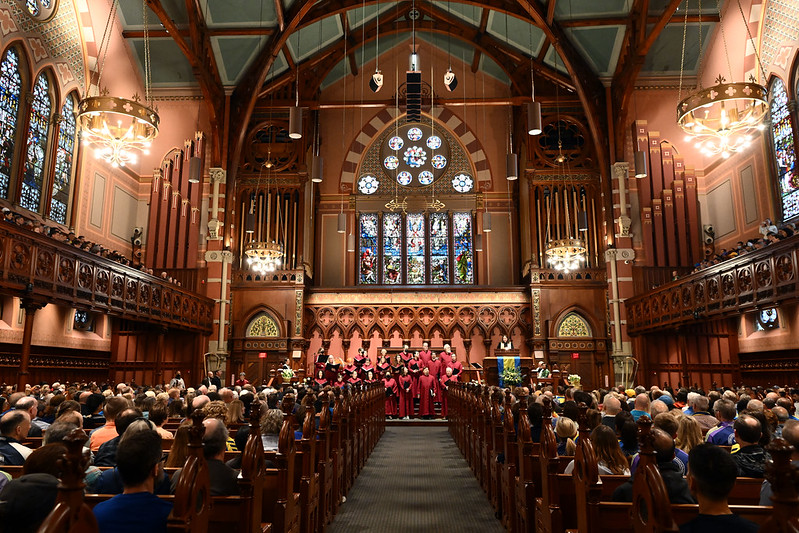
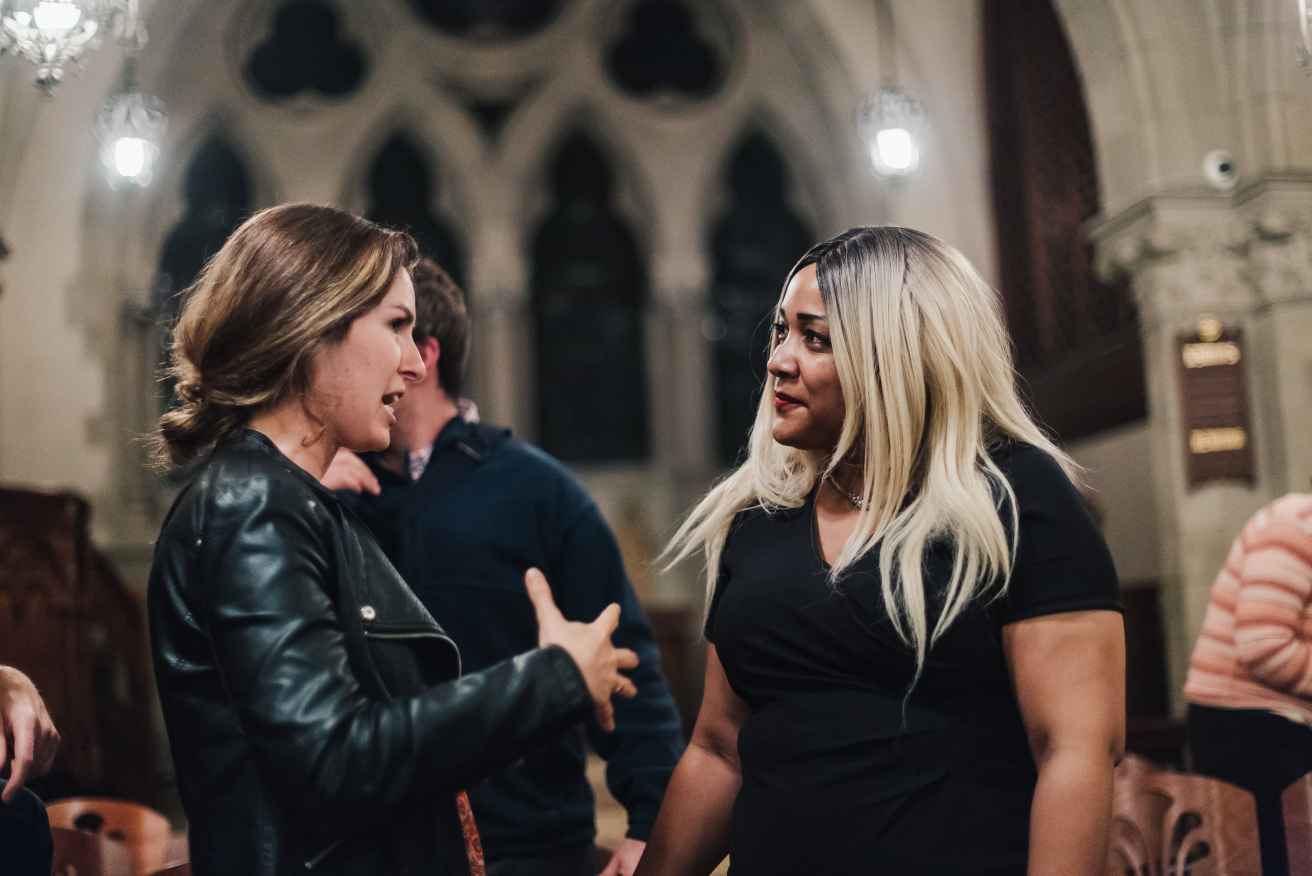
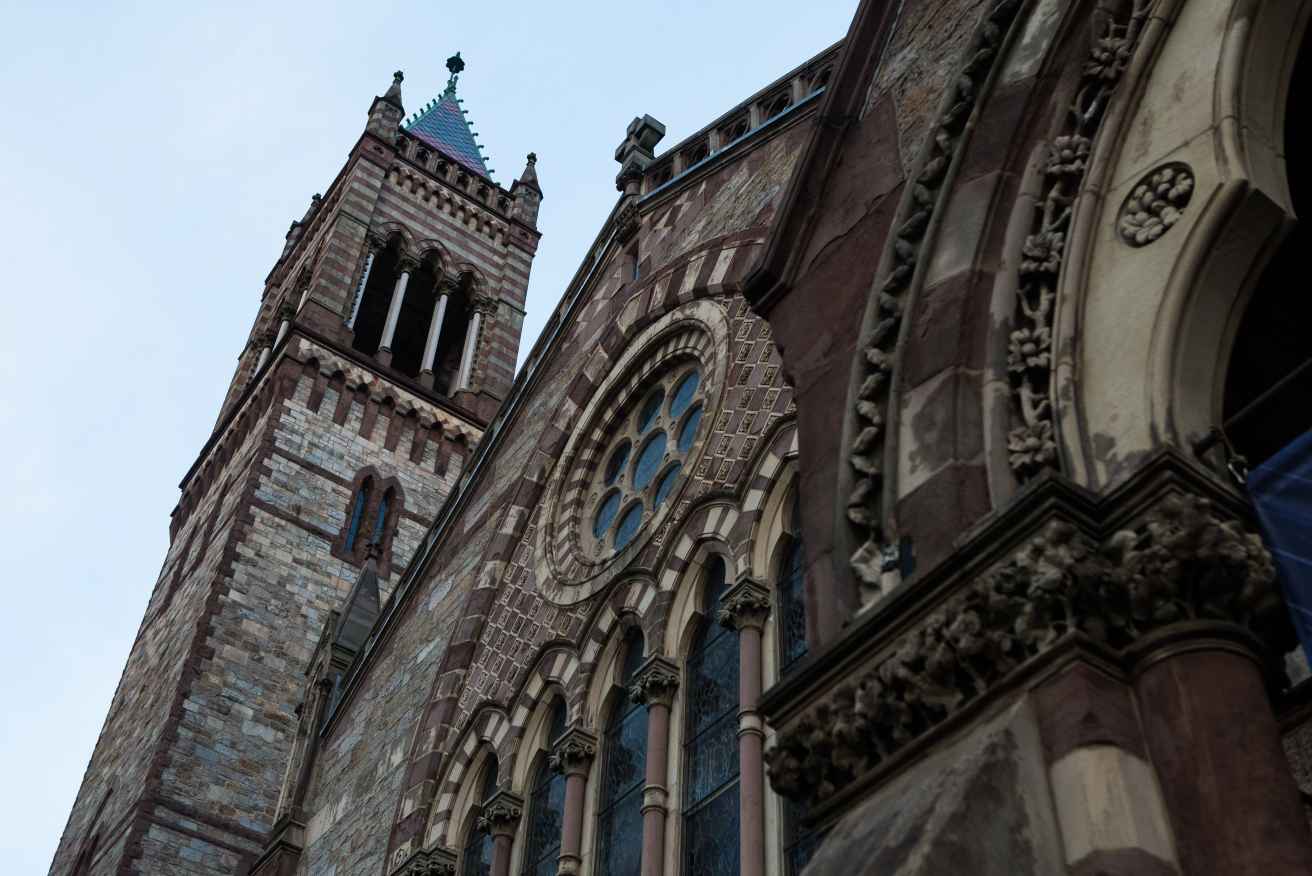
Suppose Jesus of Nazareth were to arrive in Boston in the year 2025 and pause before the doors of Old South Church. Above him rise arches shaped by centuries of devotion. Stained glass gathers light and disperses it through a face that bears his name with luminous certainty, though not his complexion. Voices swell in English cadences he never spoke. The Trinity is articulated with philosophical symmetry. Incarnation is proclaimed with doctrinal clarity.
How much of our religion would Jesus of Nazareth recognize is about him?
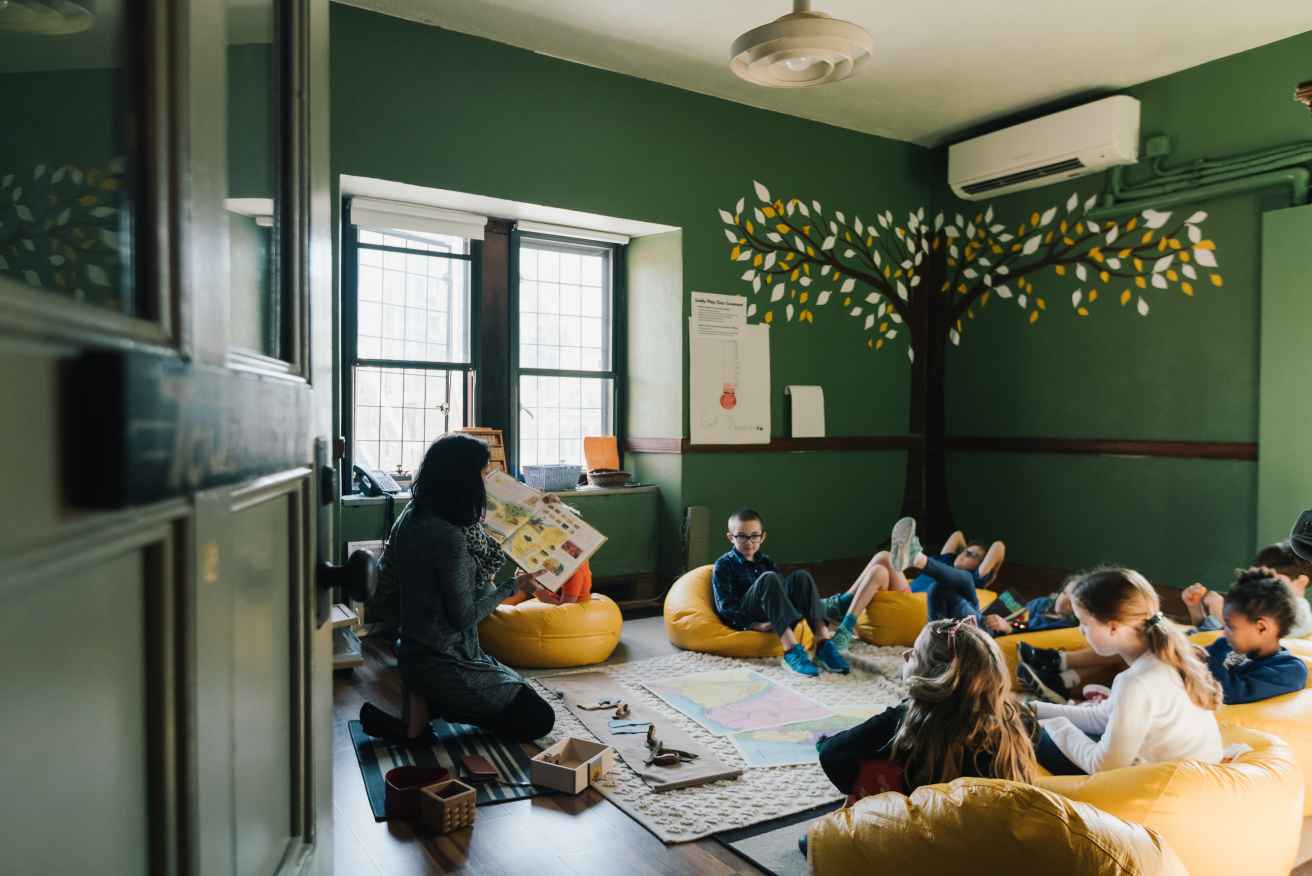
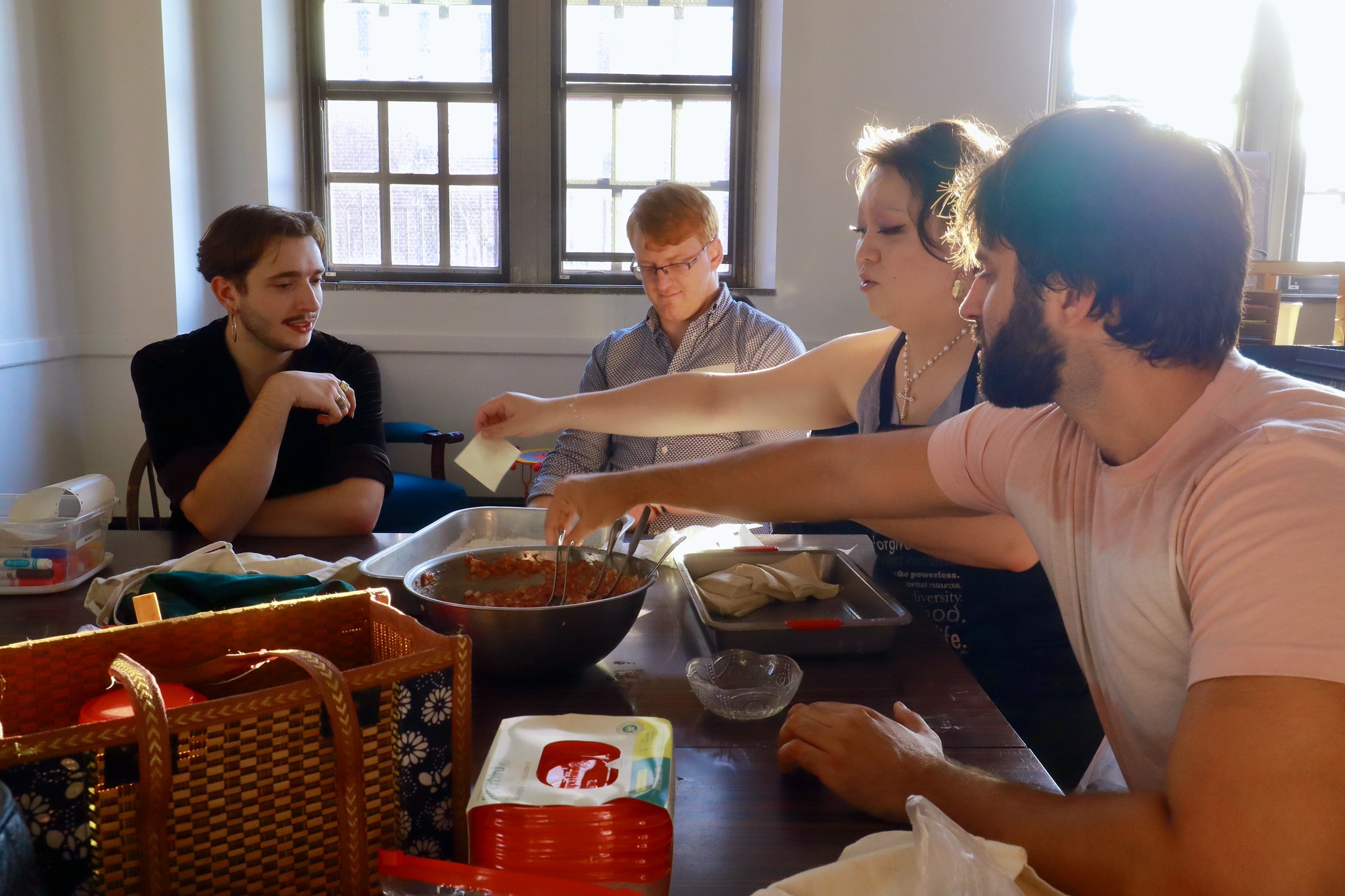
Then — from the stairs behind our front desk— the scent of garlic meeting sizzling hot oil. The quick rhythm of knives against wood, cutting vegetables, dances with the sounds of laughter, unpolished and uncontained. Up a narrow stairwell a table gathers; trans bodies sit without explanation, nonbinary names are spoken without hesitation, and relational constellations form beyond inherited diagrams of domestic respectability.
If I dare to be so bold to continue such imaginings, maybe Jesus of Nazareth, the marginalized, brown-skinned, homeless, poor, Aramaic-speaking Jew who survives under imperial occupation, probably without institutional standing, without any institutional protection, without the right tongue to carry a small talk of the 21st Century on how stock market is impacting property tax or where do we plan to summer, might recognise the smell, the sound, the laughter of this meal sharing queer group as a similar crowd of the outcasts who are doing something that he and his friends also do.
One might wonder: if incarnation means God taking flesh within history, how often does that flesh resemble power? How often does it resemble vulnerability? How often does our faith embody our flesh?
Chosen family is the first word I think of when my atheist queer friends ask me why I am so involved with my faith family, a christian church who are glorifying a tradition that is being used to justify the killing and harming of folks like us. Yes, my church is my chosen family, and as a matter of fact, my only true family since my queerness has led me being cut out from my original family, like many other queers are.
However, what does this phrase “Chosen Family” actually mean?Think of your mother or your child, the closest family member you have, and imagine that you find out that you are actually not related to that person on any level whatsoever. Would you still keep that person in your life? Would you still make the same amount of effort to spend time with that person? If your answer is yes, then that is what I am looking for.
God has been calling us to build a chosen family for queer people.
As our culture evolves and we seek better ways to describe ourselves and each other, we are experimenting with different ways to talk about our experiences and feelings. However, the downfall of this new way of talking about our humanity is that it can quickly turn into new labels and boxes that people feel pressured to fit in. People within the LGBTQIA+ community who would describe themselves as queer often have a stronger resistance to the cultural expectations to “tune it down” and appear “normal”. Self expression is a powerful way to challenge the status quo and fight for space. In comparison to people who dare not step out of the box of “straight passing” or “cis passing”, queers in LGBTQIA+ communities are usually targeted more by haters, and they are often seen at the front lines of the fight for the human rights and civil rights for LGBTQIA+ people. This also means that they are also more vulnerable in today’s world.
We, Old South, are a church of diversity, yet, as many of our members recognize, not diverse enough. Hosting a specifically dedicated queer space is not only a ministry to queer folks, it is also a necessary practice for us to stay true to our own faith.
As a church that is known for being intellectual, a lot of our efforts in practicing faith is through exercising ideas and theories. As we build this sanctuary space, safe from the physical risks, bodily stimulations, and sexual shames of the world, it is so difficult, but important, to make a space where cooking together, serving together, eating together, and then cleaning together is the center of the practice. Where the Holy Spirit is messy, chaotic, and stimulating to all our bodies. To make a space where people can accidently break out of the facades and personas that society trained us to carry around, where we step on each other’s toes by accident, share embarrassing secrets, spill food on each other while laughing at our own jokes, and shed tears over the most inappropriate but reasonable truths.
As difficult as it is, the queers of Rainbow Table make it happen.
We had 3 key members of this group in the beginning, two are Old South members, one is a friend who is not a religious person. During the pilot season (July to September of 2025), Rainbow Table hosted on average around 7 - 10 people at each gathering. As we developed a more systematic process and started to reach out to a broader audience through advertisements, our group grew steadily. As a member of Rainbow Table said to me in their specific queer choices of words: “Mama, you’re doing a fine job as is. The fact that we seemingly have new members every week is a clear sign that word is getting out about these dinners. If someone like me who generally hates people can feel welcome and included in these spaces, to the point where I keep coming back for more, then you’re doing a good job.”
Members' reflections remind me of Bonhoeffer’s deep wisdom when he wrote that “Christ exists as community”. Old South hosts many meals: receptions and committee dinners, coffee hours and celebratory banquets. Food is not foreign to this church. And yet there is only one table in this congregation where queer embodiment is centered rather than accommodated. Only one where trans and nonbinary lives are not an agenda item but the organizing presence. Only one where being a christian or using christian language is not necessarily prioritized.
If ecclesia means assembly, what kind of assembly is emerging here?
Membership lingers as a tender and deep question. For Rainbow Table members, how much do they consider themselves as a part of Old South? As I reflect on the tension between queer people who have experienced religious trauma, often traumas that were created using narratives and vocabulary that we also use at Old South, and their presence now, sitting inside a church that helped to give birth to the empire we all live under, the voice of Karl Barth came to me. He said that the church must always be reformed — not by abandoning its confession, but by returning again to its living Lord.
Many who gather at Rainbow Table do not name themselves Christian. Some may never do so. If belonging precedes belief in lived experience, what forms of participation might faith dare to imagine? If I can be boldly honest, it is clear in the history of our faith that Creed safeguards truth but Covenant safeguards presence. Can we find space for covenant formation with people who refuse to use the words like “God” “Grace” “Faith” because these words carved deep wounds on their hearts and bodies?
Or, is it the DUTY of a follower of Jesus to push for space for such a covenant, since the harm was done within the system we now participate in?
If Old South once midwifed a nation’s imagination, might it now midwife its own renewal?
If faith once shaped democratic freedom, might it now shape relational freedom?
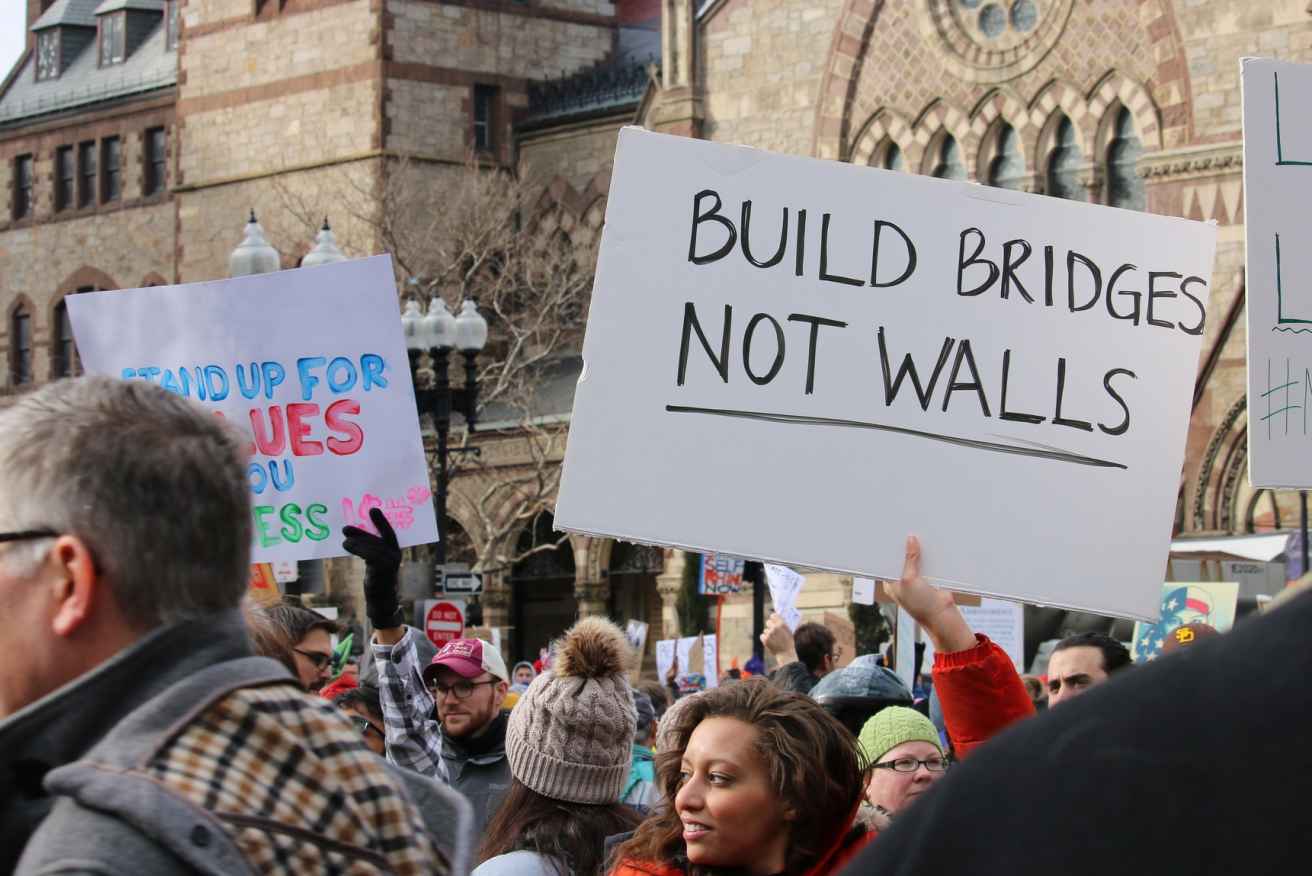
As our world enters into a time when the launching of unprecedented oppression becoming the new norm, voices of need arise from queer communities at Rainbow Table: legal support for queer refugees, housing resources for young queer of low income, food security, medical resources, mental health services.
Rainbow Table is a new ministry at Old South, young, small, at its early stage. Yet I praise God that it exists and grows here, in the center of history making, in the center of tension, in the center of us.
Let’s pray for and work on a larger table.
William Wei